
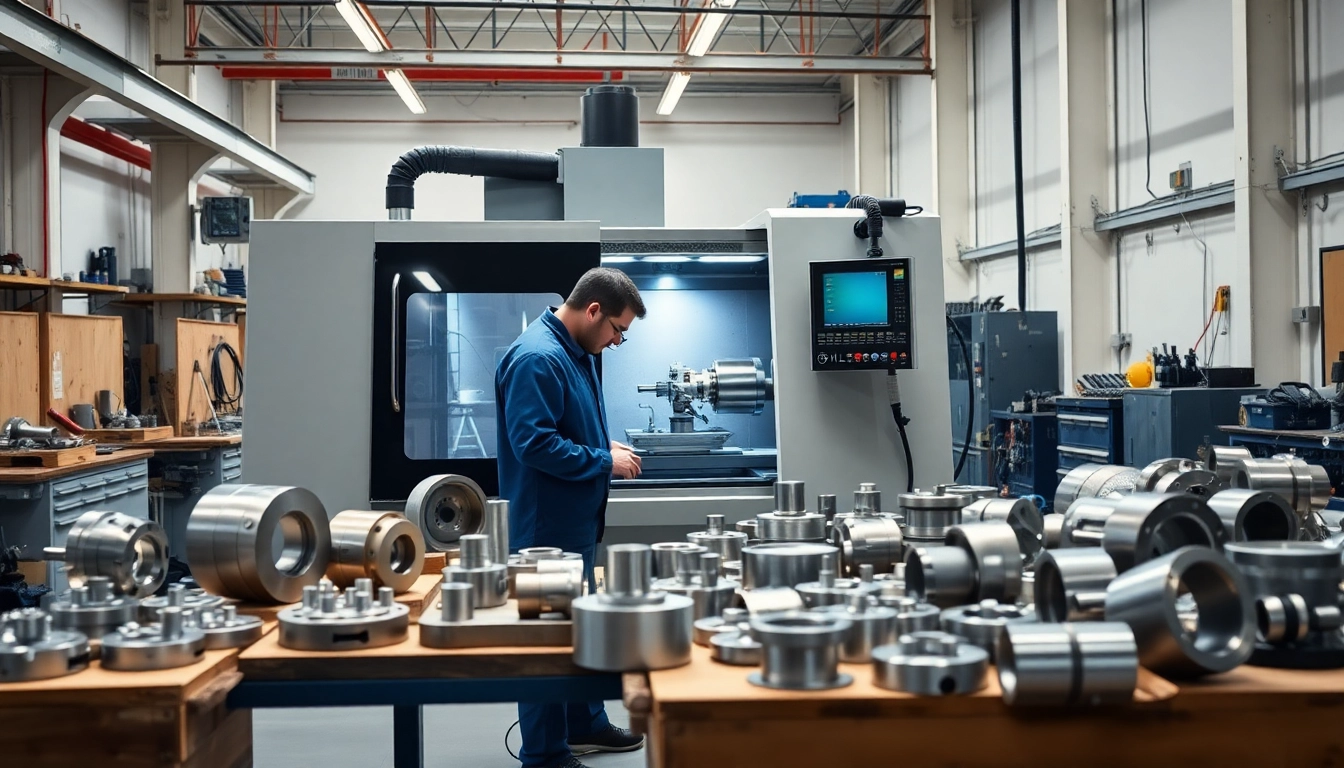
Understanding the Role of a Custom Part Manufacturer
What is a Custom Part Manufacturer?
A custom part manufacturer specializes in producing components tailored to specific designs, requirements, and technical specifications. These manufacturers utilize various technologies and processes to create parts that cater to unique applications across different industries. Unlike standard suppliers, custom part manufacturers focus on providing bespoke solutions that enhance performance, quality, and efficiency in final products.
Key Benefits of Custom Manufacturing
Custom manufacturing offers numerous advantages. First, it provides the opportunity to create parts that exactly meet the requirements of a project, avoiding the compromises often associated with off-the-shelf solutions. This precision can lead to enhanced product performance and durability. Additionally, custom parts can often be produced in smaller batches, allowing companies to respond quickly to changes in demand or design. Custom manufacturing can improve production efficiency and reduce waste by designing parts that fit precisely, thereby minimizing the need for extensive adjustments during assembly or integration.
Industries Relying on Custom Part Manufacturing
Various industries utilize custom part manufacturing to address their specific needs. Key sectors include:
- Aerospace: High precision and adherence to strict safety standards make custom components essential.
- Automotive: Custom parts improve vehicle performance and safety while accommodating innovation in design.
- Medical Devices: Unique parts can be created for specific medical applications, ensuring functionality and compliance with regulations.
- Electronics: Custom solutions are critical for creating unique circuit boards and electronic components.
- Industrial Equipment: Helping in the design of machinery that meets specific operational requirements.
Processes Involved in Custom Part Manufacturing
Types of Manufacturing Processes
Custom part manufacturers utilize several different manufacturing processes, each suitable for different materials and design specifications. Common processes include:
- CNC Machining: A computer-controlled process that allows for high precision and repeatability in part production.
- 3D Printing: An additive manufacturing process that enables the creation of complex geometries without the need for extensive tooling.
- Injection Molding: An efficient method for producing plastic parts, suitable for high-volume production.
- Die Casting: A process for shaping metals that allows for high precision and smooth finishes.
- Sheet Metal Fabrication: Involves cutting, bending, and assembling sheet materials to create various components.
CNC Machining Explained
CNC (Computer Numerical Control) machining is a cornerstone of custom part manufacturing. It involves the use of computer programs to control machine tools for shaping materials into desired parts with high precision. CNC machining is particularly valued for its repeatability, allowing manufacturers to produce numerous identical parts without deviation. This process can work with a variety of materials, including metals, plastics, and composites, making it versatile for many applications.
3D Printing in Component Production
3D printing is revolutionizing custom part manufacturing by enabling rapid prototyping and on-demand production. This additive manufacturing technique allows designers to create intricate geometries that would otherwise be impossible with traditional methods. 3D printing minimizes waste since material is only added where needed. Industries leveraging 3D printing have noted shortened lead times and costly tooling avoidance, enhancing agility and innovation in product development.
Choosing the Right Custom Part Manufacturer
Assessing Manufacturer Capabilities
Selecting the right custom part manufacturer begins with assessing their capabilities. Factors to consider include their technological expertise, equipment quality, and experience in your specific industry. A manufacturer well-versed in the required materials and processes can significantly impact product quality and speed. Reviewing their portfolio and previous work can provide insights into their adaptability and technical skill.
Evaluating Quality Control Mechanisms
Quality control is paramount in custom manufacturing to ensure that all components meet the required specifications and standards. Manufacturers should have robust quality assurance processes in place, such as ISO certification, regular inspections, and testing protocols for materials and finished parts. Understanding a manufacturer’s quality control measures can help mitigate risks of defects and ensure consistent production quality.
Understanding Turnaround Times
Turnaround time is critical in custom manufacturing, as it affects project timelines and costs. Understanding a manufacturer’s typical lead times for different processes can help establish realistic expectations. Discussing turnaround times during the selection process allows clients to identify manufacturers who align with their schedules while ensuring they maintain quality and precision in production.
Customization and Design Considerations
Importance of Accurate Design Specifications
Accurate design specifications form the foundation of successful custom manufacturing. Detailed drawings, material requirements, and performance criteria must be thoroughly communicated to ensure the final product meets expectations. Working closely with engineers and designers to create complete specifications minimizes the risk of errors and delays, leading to a smoother manufacturing process and higher quality parts.
Utilizing CAD Software for Design
Computer-Aided Design (CAD) software is essential for developing precise designs for custom parts. CAD allows designers to create, modify, analyze, and optimize designs before they enter production, thus significantly improving accuracy. Integrating CAD into the manufacturing workflow can also enhance communication between designers and manufacturers, providing clear visual references to facilitate accurate production.
Material Selection for Custom Parts
The choice of materials in custom part manufacturing plays a significant role in the performance of the final products. Factors such as strength, flexibility, temperature resistance, and corrosion resistance must be considered based on the part’s application. Manufacturers often provide expertise in material selection, helping clients choose materials that offer the best balance between cost, performance, and manufacturability.
Future Trends in Custom Part Manufacturing
Impact of Automation on Manufacturing
Automation is profoundly impacting custom part manufacturing, improving efficiencies and accuracy. Smart factories utilizing automated processes allow for better precision in production while reducing labor costs and human error. Robotics and AI are increasingly integrated into manufacturing lines, leading to quicker production cycles and the ability to respond to demand fluctuations without significant delays.
Advancements in Material Technology
The development of new materials continues to shape the landscape of custom part manufacturing. Innovations in composites, smart materials, and lightweight metals are enabling manufacturers to produce parts that offer enhanced durability and functionality. These advancements also drive sustainability initiatives, with manufacturers increasingly using recyclable and eco-friendly materials in their production processes.
Sustainable Practices in Manufacturing
As environmental concerns grow, many custom part manufacturers are adopting sustainable practices to reduce waste and energy consumption. Techniques such as sourcing sustainable materials, reducing scrap through efficient design, and implementing energy-efficient technologies are becoming more prevalent. Companies prioritizing sustainability not only contribute positively to the environment but also meet the growing consumer demand for eco-conscious products.
FAQs
What is a custom part manufacturer?
A custom part manufacturer specializes in creating components tailored to specific designs and specifications for various industries, including automotive and aerospace.
How long does it take to get custom parts?
Turnaround time varies by project complexity, but many manufacturers can deliver within days to weeks, depending on the process and order volume.
What materials can be used in custom part manufacturing?
Common materials include metals (aluminum, steel), plastics, and composites, selected based on the specific requirements and applications of the parts.
Can I provide my designs for custom manufacturing?
Yes, most custom part manufacturers accept client designs through CAD files, allowing for accurate production of specific components.
Why should I choose a custom part manufacturer over off-the-shelf options?
Custom part manufacturers provide tailored solutions that meet unique specifications, offering flexibility, precision, and sometimes lower costs for bulk production compared to off-the-shelf parts.